
Say cheese! Why these backroads are so beautiful (and 9 other Sardinian facts
Among cyclists, Sardinia isn't as well known as Southern European hotspots like Mallorca or the Spanish costas. So let's do a quick course: 10 things you may or may not know about this island, including lots of stuff that comes in handy during future rides.
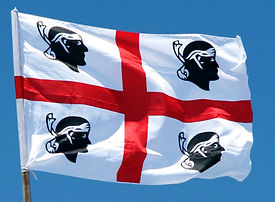
Fluttering at the beach, printed on keychains and other tourist trinkets, Ichnusa beer labels and local cycling club jerseys—the distinctive, official Sardinian flag is everywhere. There is no consensus regarding the origins of this white banner featuring a red cross and four Moorish heads. The most famous legend says that the Spanish brought the flag with them after the Battle of Alcoraz (1096); Saint George, bearing his red-and-white coat of arms, reportedly came to the aid of King Pedro I on the battlefield, where the heads of four Moorish kings were discovered afterward. In 1999, a law was passed mandating that the four heads must face right rather than left.
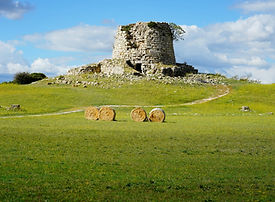
What are those mysterious towers you see everywhere across the Sardinian landscape during your rides? Officially, more than seven thousand of these nuraghes — dating back to the Bronze Age and reaching up to 20 meters — have been cataloged. Over 3,000 years later, sometimes the remains are little more than a pile of stones, yet in many places nuraghes still stand relatively intact. Scientists cannot say for certain what purpose the structures served, but given their frequent location on hills and other strategic points, they likely had a military function. Nuraghes shouldn’t be confused with the watchtowers scattered along the Sardinian coast; those were built by the Aragonese as late as the fourteenth century. Modern stuff!
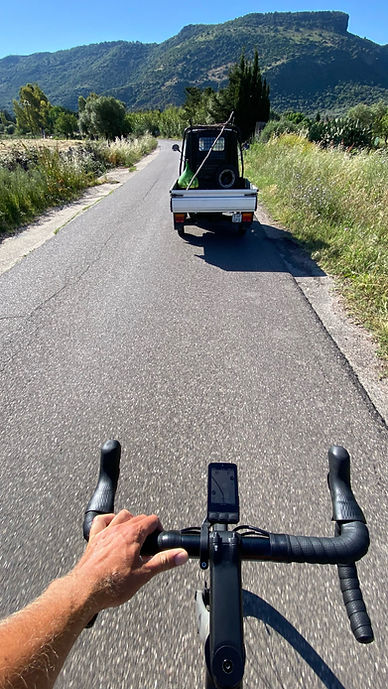
Why would you hire me to map out your cycling routes when there are plenty of apps that let you do it yourself? Well, for instance because Rotte Sarde knows the backroads that other cyclists overlook — roads that are therefor missing from the algorithms and heatmaps of platforms like Strava and Komoot. And the great thing about backroads in Sardinia is that they are often in great condition. The explanation? Cheese! Farmers are required to keep their farms easily accessible for the daily tanker truck that collects the sheep's milk for the famous pecorino sardo. That is why you can often cycle on beautiful asphalt in the countryside, encountering nothing more than the occasional puttering Piaggio or a flock of sheep.
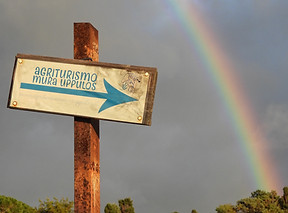
You will inevitably come across them while looking for accommodation for your cycling trip in Sardinia: agriturismos — places where you can eat and sleep on a farm. Back in the 1980s, the concept wanted to provide farmers with extra income and thereby curb the exodus from rural areas. They’re now everywhere throughout Italy. Most agriturismos offer dinner, rooms and breakfast, though some focus exclusively on the culinary part. Sunday lunch is a true phenomenon: entire families gather for a ritual that often lasts into the late afternoon. It is also ideal for hungry cyclists, as — for a often modest price — you are served an abundant and rich meal made from the farm's own produce.
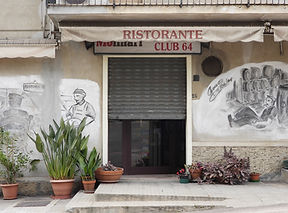
Speaking of food, one of the biggest pitfalls for unsuspecting foreign cyclists is thinking they can dine whenever they please — simply whenever hunger strikes. That is not how things work in Sardinia, however, where tradition matters and people prefer to stick to the ways things have always been done. Opening hours for restaurants are quite strict: lunch is served between 12:30 and 14:30, while dinner generally isn't available before 20:00. Furthermore, pizza usually isn’t served at lunchtime, although there are certainly tourist-oriented exceptions to the rule. In such places, you might even be able to order a cappuccino afterwards…
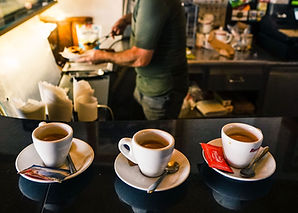
And speaking of drinks: no matter how small or deserted a village in Sardinia might be, as a thirsty cyclist you will almost always find a bar there. They are welcome spots to take a break, especially during a ride through the sparsely populated interior. You can use the restroom, refill your water bottles (Sardinian tap water is generally excellent to drink), and order a perfect espresso for around 1.20 euros. Add a fresh croissant to go with it and you’re all set for the rest of your ride. Just bear in mind that you’ll often find the doors locked around midday, as the bartender naturally takes a proper lunch break at the traditional times.
Mountains, hills & plains: there’s something here for every cyclist
Competitive cyclists aiming for a full week tackling serious climbs traditionally head straight for the Alps, the Pyrenees or the Sierra Nevada. Fans of hilly terrain might opt for the Ardennes, Alsace or Tuscany, while those who prefer flat roads have half of Europe to choose from.
What makes Sardinia special is that it has these three cycling worlds coexisting, side by side. Within a relatively small area
— slightly smaller than Belgium and just over half the size of the Netherlands — there is truly something for every cyclist.
‘Mountain goats’ can indulge their passion in the Gennargentu, a lush green national park in the heart of the island; here, roads wind between rugged mountain ridges, and a 150 kilometer loop can easily rack up 3,000 to 4,000 meters of elevation gain. Yet other parts of Sardinia also boast mountainous areas featuring plenty of long, challenging climbs.
Those who prefer hilly routes can enjoy beautiful rides in the rolling landscape near Barumini, famous for the Su Nuraxi complex, dating back to the Late Bronze Age. Or consider the Costa Smeralda,
And there are more areas where you can easily enjoy a few hours of riding without racking up significant elevation gain: for instance near the southern peninsula of Sant’Antioco or north of Alghero.
Variety
And perhaps the best part? Sardinia is compact enough for these landscapes not to be separate worlds. From a base like Oristano, you can just as easily ride the flat loop mentioned earlier as tackle some challenging climbs in another direction. This kind of variety is available almost everywhere on the island. It’s ideal in case you want to alternate between demanding and less strenuous routes, or if you prefer to decide on the day itself what your legs are up for. The only catch? It requires quite a bit of planning.
Rotte Sarde is happy to handle that for you. We start by creating personalised cycling routes that perfectly match your preferences, while also taking the practical aspects of your stay into account. Do you want to spend a week climbing in the Gennargentu mountains with a single hotel as your base? Or would you prefer a tour that takes you to different accommodations along the way? We combine your wish list with our local knowledge, ensuring you avoid busy roads while taking in all the beautiful spots that are not to be missed.
Are you considering Sardinia as a cycling destination but aren't quite sure what the trip should look like? Get in touch with Rotte Sarde for a no-obligation chat about the possibilities.
the azure-blue playground of the happy few in the northeast: in peak season, it is an overcrowded tourist trap best avoided by cyclists, but during the quieter months, it offers an idyllic setting perfect for memorable rides. The undulating roads north of Olbia frequently offer stunning views — including those of the renowned Maddalena Archipelago and, further off, the southern coast of Corsica.
If you prefer to keep the terrain as flat as possible, the area around Oristano is perfect for this — offering, for instance, a loop around the Cabras lagoon and a trip to the pinkish ‘crystal beach’ of Is Arrutas.
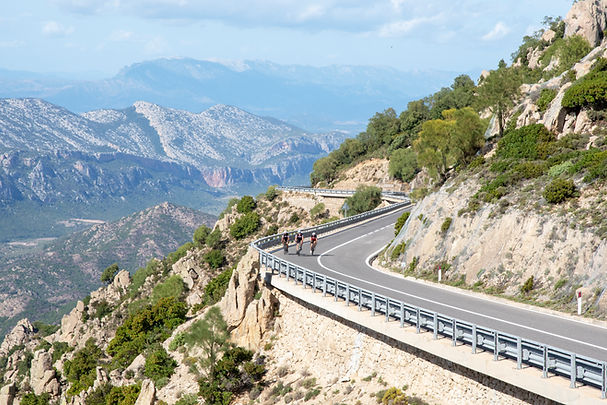
Cyclists on the SS125, the road between Baunei and Dorgali in the Gennargentu mountains. (photo iStock)
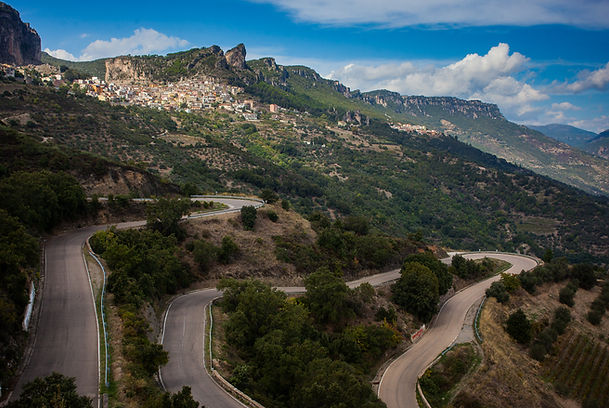
A hairpin road near Ulassai, the village in the background, also in the Gennargentu area. (photo iStock)
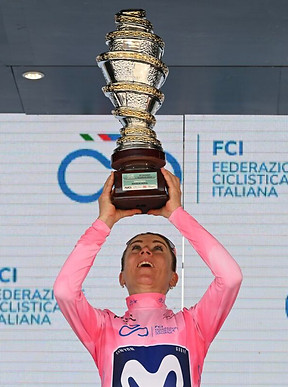
Partly due to logistical complications, the professional peloton rarely races on Sardinian roads. That will finally change in 2028, when the Vuelta visits the island. Italy’s own Giro d’Italia has visited Sardinia only four times: in 1961, 1991, 2007, and 2017. That last year saw 'La Grande Partenza' take place in Alghero, setting the stage for Tom Dumoulin’s overall victory. The Giro Donne started in Sardinia in 2022, while the 2023 edition concluded there; Annemiek van Vleuten won on both occasions.
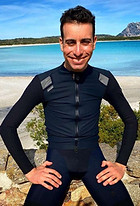
The Sardinian flag is also reflected in the nickname of the island’s most famous cyclist. Fabio Aru — winner of the 2015 Vuelta and a two-time podium finisher at the Giro d’Italia — was known as 'il Cavaliere dei Quattro Mori', or the Knight of the Four Moors. He retired from professional cycling at the age of 31 and now runs an academy named after himself on his native island. There, young riders learn the fundamentals of the sport, with a strong emphasis on cyclocross, Aru’s first love.


A ‘digestivo' to round off this ten-course meal! Limoncello is a common after-dinner drink throughout Italy. Mirto, made from wild berries, is a typically Sardinian specialty. However, the best story belongs to ‘filu ferru’, a clear spirit distilled from grape seeds and skins—often referred to as Sardinian grappa for this reason. The name translates roughly to ‘iron wire’; farmers once used this to mark their illicit batches, which they buried underground to outsmart tax inspectors. After a glass of filu ferru, your day of cycling is effectively over — especially the homemade versions often contain close to 50 percent alcohol.
Aru is certainly famous, but Sardinia has only one true sporting hero: the footballer Luigi Riva, or Gigi for short. He was the legendary, taciturn striker whose goals secured Cagliari’s only national title (1970) and who, despite hailing from the Italian mainland, became a proud Sardinian. He would never leave—not even when Juventus offered 1 billion lire plus nine other players for him. Riva (who passed away in 2024) remains the all-time top scorer for the Italian national team, and colorful murals bearing his likeness can be seen all over the island.
A perfect winter destination to go riding (or rowing)
Sun-drenched winter days, wonderfully mild temperatures and a full two hours of extra daylight compared to for instance the UK or the Netherlands: as a winter cycling destination, Sardinia rivals more traditional hotspots like southern Spain or Mallorca. Although Joris Nieuwenhuis might see things differently…
Last winter, the Dutch professional cyclist planned a little training camp in Sardinia, to coincide with the Cyclocross World Cup race he was competing in on the Italian island. Combining the race with some pleasant endurance rides in balmy conditions made perfect sense. But the plan literally washed out. ‘I would have been better off taking a boat than a bike’, Nieuwenhuis commented on Strava after a rain-soaked training ride.
Obviously, this story isn't meant to discourage winter cycling trips to Sardinia. Think of it instead as a small, honest reality check — one that basically applies to the entire Mediterranean these days. Recall the extreme weather that hit Spain, Portugal and
Morocco earlier this year and the conclusion is clear:


no matter which Southern European cycling destination you pick, guaranteed sunshine is a thing of the past.
The fact remains that, for the vast majority of the winter months, the cycling weather in Sardinia is fantastic. You can almost always head out in shorts, thanks to mild temperatures that frequently hit 20 degrees Celsius along the coast. During the dark days leading up to Christmas, there are a full two hours more daylight in Cagliari than in Amsterdam or London. (In other words: two extra hours to play outside!) And on average, the sun still shines abundantly, about five hours a day.
Are you looking for a cycling destination for the upcoming winter period, either solo or as part of a group? Choose Sardinia and get in touch now with Rotte Sarde. I’d be happy to help you get started, for instance by creating a travel itinerary, finding accommodation or arranging various other options. And last but not least, I offer personalised routes tailored exactly to your wishes, using my knowledge of the local roads and conditions.
O, and if you really want me to, I’ll even help you rent a boat.

Joris Nieuwenhuis (left) during the Cyclocross World Cup race in Sardinia.


Clockwise or the other way round: that's the question

The red cycling route on the right is what Italians call ‘il Periplo della Sardegna’: a tour along the complete contours of Sardinia. A great idea for this autumn or the winter period, right?! Depending on which coastal roads you take and whether you dare to tackle some unpaved sections, the total distance usually adds up to just over 1100 kilometers. Quite an undertaking, even more so because there's also over 11.000 meters of elevation gain. I know some diehards who have wrapped it up in five days, with assistance from a support vehicle. The more sensible way would be to split those 1100 kilometers up into at least seven or eight stages. The question is: where do you start? And what are good stops along the way? Which areas and roads are best avoided? And equally important: in which direction should you ideally ride, clockwise or counter-clockwise? I am happy to help you answer these kinds of questions, with advice and/or in the form of personalised routes that meet your exact wishes and physical capabilities. Would you also like an itinerary to and from Sardinia? Suggestions for comfortable places to stay and rental bikes? That (and much more) can all be arranged. Contact me to further shape your cycling plans in Sardinia.
PS: True adventurers may add a few smaller islands off the Sardinian coast to their special XL-version of the Periplo. Extra kilometers, extra adventure! La Maddalena, San Pietro and Asinara are all accessible by ferry, but especially during the low season, fitting those crossings into your schedule requires some planning. You know where to find me!


The Periplo della Sardegna in pictures. From left to right: Bosa (photo: Pexels), Sant'Antioco, the scenic coastal road between Alghero and Bosa and the memorial for the Giro d'Italia 2017 start in Alghero. Upper photos: Spiaggia di Tuerredda, Cala Gonone, S'Archittu and S'Ena Arrubia.